
What an AI agent actually does, in plain words
AI agents are chatbots that can take actions: open apps, call tools and finish multi-step tasks. Here is how they work and where they still fail.
Key points
- An AI agent is a language model that can use tools and repeat steps until a task is done.
- The model plans, calls a tool, reads the result and decides the next step in a loop.
- Agents are good at well-defined digital chores and still weak at long, open-ended jobs.
- Good agents ask before anything costly or irreversible, like paying or deleting.
"Agent" has become the most overused word in tech. Strip away the marketing and the idea is simple: an AI agent is a language model that does not just answer you, it acts for you.
The short version
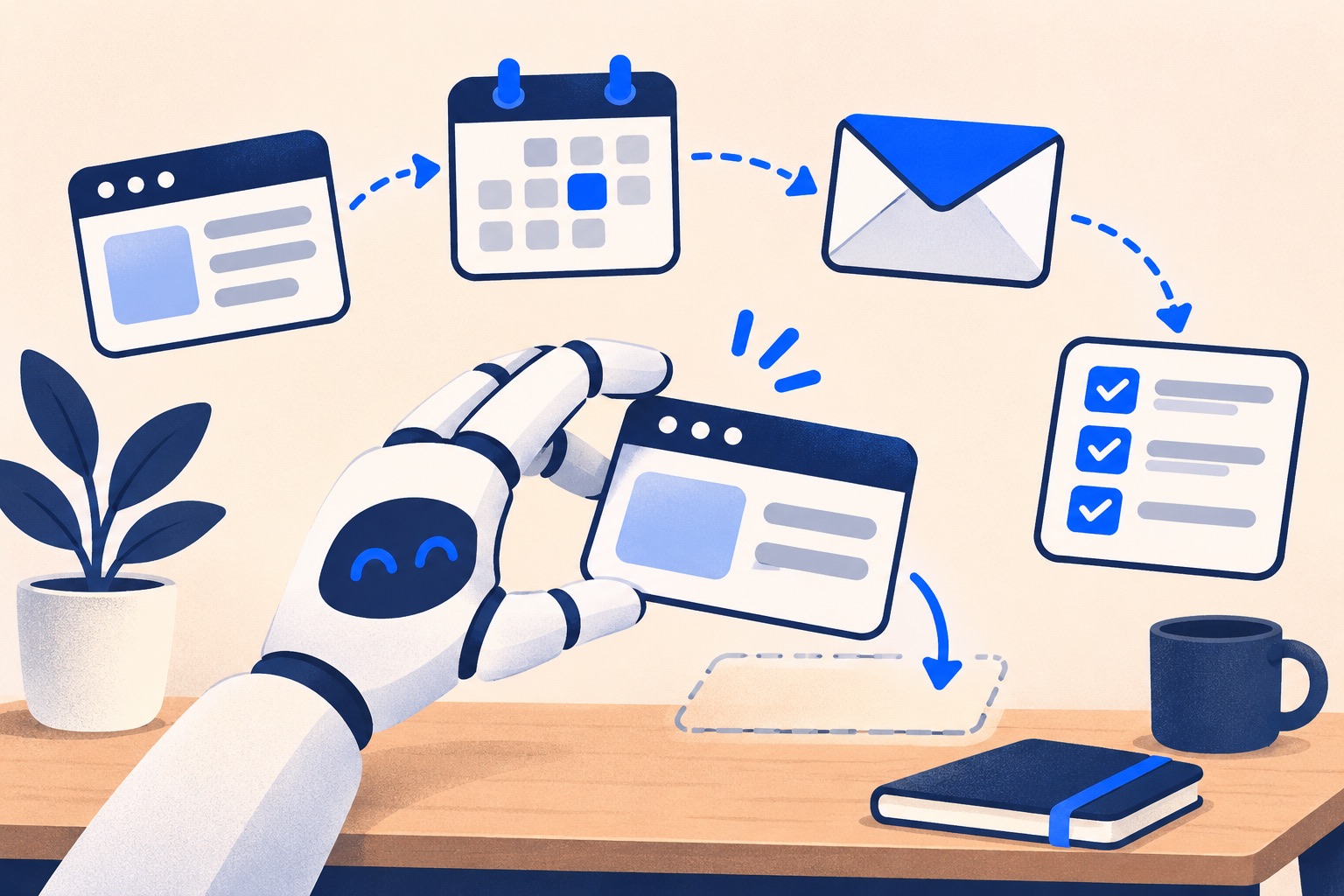
A normal chatbot takes your message and writes a reply. An agent takes your goal and works toward it. It breaks the goal into steps, uses tools to carry them out, checks what happened and keeps going until the job is done or it gets stuck.
Ask a chatbot to "find a free hour next week and book a call with Sam" and it will explain how you could do that. Ask an agent and it will open your calendar, find the gap, draft the invite and ask you to confirm before sending.
How an agent works under the hood
Almost every agent runs the same loop:
- Plan. The model reads the goal and decides what to do first.
- Act. It calls a tool: a web search, a calendar API, a code runner, a browser.
- Observe. It reads the tool's result.
- Repeat. It decides the next step, or decides it is finished.
The tools are what turn a model into an agent. A growing share of them are connected through the Model Context Protocol, an open standard that lets one assistant plug into many services the same way.
What agents are good at today
Agents shine on chores that are digital, repetitive and easy to check:
- Collecting information from several sites into one summary.
- Filling in forms and moving data between apps.
- Writing, running and fixing small pieces of code.
- Triaging an inbox or a support queue for a human to approve.
These jobs share one thing: success is easy to verify. When an agent can check its own work, it can correct itself.
Where they still fail
Long, open-ended tasks are still hard. Small mistakes compound across dozens of steps, and an agent can confidently continue down the wrong path. Agents also struggle with interfaces that change often, logins, and anything that needs judgment about people.
That is why the better products keep a person in the loop for anything costly or irreversible: payments, sending messages, deleting data. The risky step needs a human present, the same idea behind passkeys and two-step login.
Agents are moving onto your devices
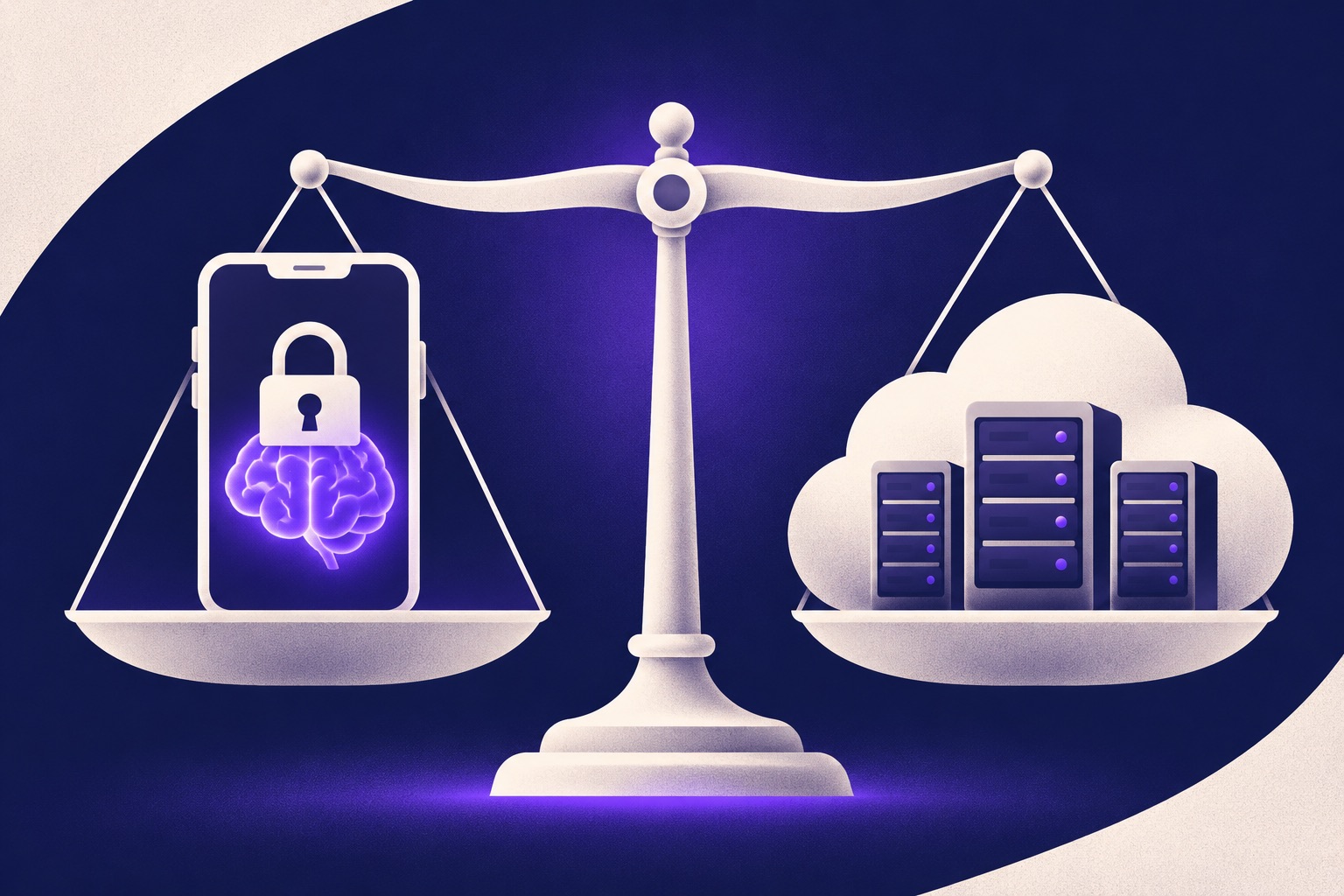
Most agents today run in the cloud. That is starting to change as small AI models become good enough to run on a phone, which brings lower latency and better privacy for personal tasks. Our on-device vs cloud comparison covers the trade-offs, and the free AI tools guide lists assistants you can try today.
What to watch
Three things will decide how useful agents become over the next year: how reliably they finish long tasks, how many services expose tools for them, and how well they explain what they did. The last one matters most. An agent you cannot check is an agent you cannot trust.
Frequently asked questions
Is an AI agent the same as a chatbot?
No. A chatbot only answers in text. An agent uses the same kind of model but can also take actions through tools, such as searching, editing a file or sending a request to an app.
Can AI agents work without supervision?
For short, well-defined tasks they often can. For anything that spends money, sends messages or deletes data, well-built agents stop and ask a person first.
What is MCP?
The Model Context Protocol is an open standard that lets AI apps connect to tools and data sources in a consistent way, so one agent can work with many services.
Sources
Related
Five free AI assistants worth trying, and what each does best
ChatGPT, Claude, Gemini, Copilot and Perplexity all have free plans. Here is what each one is best at, so you can pick the right one for the job.

How to spot an AI-generated political ad before you share it
AI makes fake political images, voices and videos cheap to produce. Use these six checks before you share an ad, plus the labels platforms now require.
On-device AI vs cloud AI: which should handle your data?
On-device AI is fast and private; cloud AI is smarter and needs no battery. A side-by-side comparison, plus which tasks belong where.